
Creatine Over for Those Over 40
If you’ve researched supplements for adults over 40, the usual recommendations surface: vitamin D, calcium, perhaps collagen. But there’s one well-researched supplement consistently overlooked—despite compelling evidence for its benefits.

Creatine.
Yes, the same creatine associated with bodybuilders and performance athletes. The same supplement your nephew probably takes for his lifting routine.
Here’s what’s worth knowing: Creatine isn’t designed for any particular demographic. The science increasingly suggests it may be especially relevant in midlife—supporting muscle maintenance, cognitive function, and cellular energy.
Let’s examine the research, address the misconceptions, and determine whether creatine deserves consideration in your approach to sustained vitality.
What IS Creatine?
Creatine is a naturally occurring compound found in muscle tissue and brain cells. Your body synthesizes some internally, and you obtain more from protein-rich foods—meat and fish particularly.
Consider creatine your cells’ rapid-response energy system. When muscles require quick energy bursts—lifting weight, climbing stairs, maintaining a challenging position—creatine helps regenerate ATP (adenosine triphosphate), your cells’ primary energy currency.
The relevance for adults over 40: Natural creatine stores decline with age. This suggests supplementation may offer proportionally greater benefit as we get older.
Creatine supplements provide a concentrated form of what already exists in your body. You’re not introducing anything foreign—you’re optimizing available resources.
Why Adults Over 40 Should Pay Attention

1. Muscle Preservation
After 40, sarcopenia (age-related muscle loss) claims 3-5% of muscle mass per decade—unless actively countered through resistance training. This isn’t vanity; it’s function. Muscle loss affects metabolism, balance, bone density, and independence.
Creatine supports:
- Enhanced strength training adaptations — Your workouts become more effective
- Improved recovery between sessions — Less soreness, faster bounce-back
- Lean muscle development and maintenance — Fighting the natural decline
- Greater effectiveness from each training investment — Better returns on your effort
Translation: The work you’re already doing yields better results.

2. Cognitive Function
Here’s where it gets interesting—and where most people haven’t heard the research.
The brain ranks among the most metabolically active organs in your body, and it utilizes creatine for energy. Research suggests creatine supplementation may:
- Support cognitive function during stress and sleep deprivation — Relevant for anyone juggling demanding careers and family responsibilities
- Assist with mental clarity — Particularly during perimenopause, menopause, or any high-stress life period
- Support working memory and processing speed — The mental sharpness we often feel slipping in midlife
A 2018 study published in Experimental Gerontology found creatine supplementation improved memory performance in older adults. While research continues developing, the initial findings warrant attention.
If you’ve experienced the frustration of walking into a room and forgetting why, or struggling to find a word that used to come easily, the cognitive benefits of creatine deserve consideration.
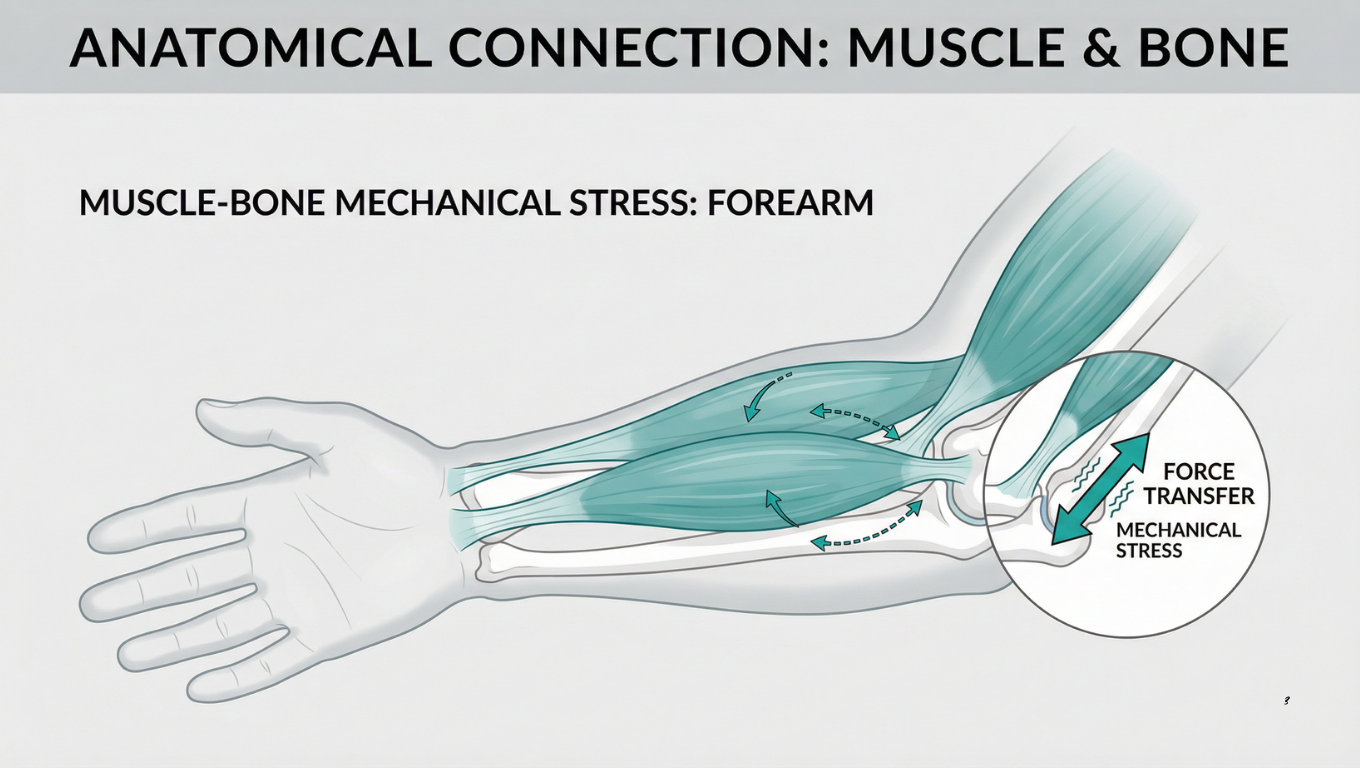
3. Bone Health Connection
Creatine doesn’t directly build bone. But here’s the connection that matters: stronger muscles create mechanical stress on bones—which stimulates bone maintenance and growth.
For anyone monitoring osteoporosis risk (and after 40, that should be most of us), the muscle-bone relationship is significant. You can’t effectively address bone density without addressing the muscles that support and stress those bones.
Creatine supports the muscle side of that equation.

4. Energy and Recovery
Many adults in midlife report persistent fatigue that doesn’t resolve with more sleep. While creatine isn’t a stimulant—no jitters, no crash, no afternoon slump—it supports cellular energy production at the foundational level.
Users commonly report:
- Enhanced workout performance
- Improved recovery between sessions
- More consistent energy throughout daily activities
This isn’t the artificial energy of caffeine. It’s supporting how your cells actually produce and utilize energy.
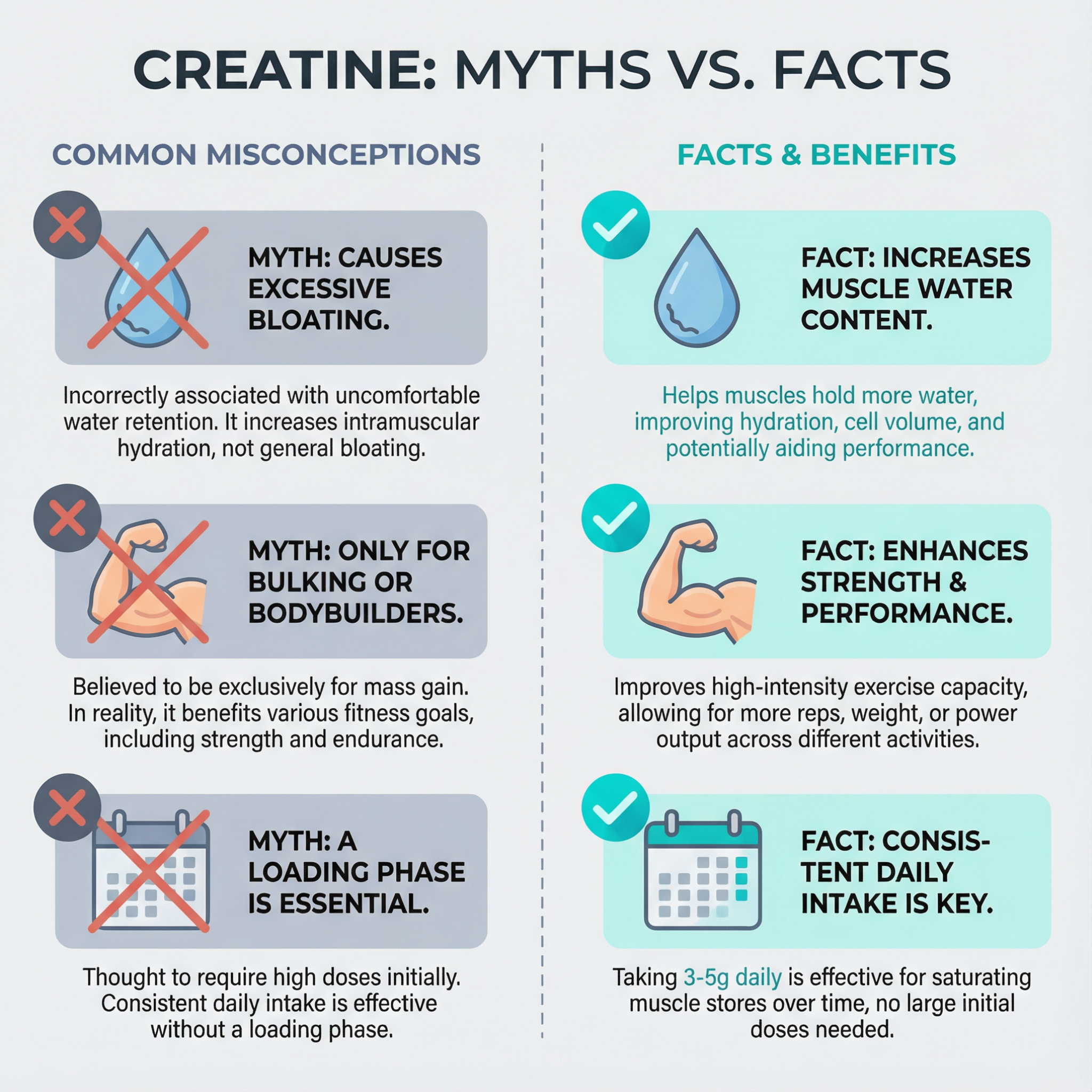
The Misconceptions—Addressed
Let’s tackle the myths that have kept creatine pigeonholed as a “bodybuilder supplement.”
“Creatine will make me bulky.”
Reality: Creatine doesn’t build muscle independently—it supports muscle development through training. Without significant caloric surplus and heavy lifting protocols specifically designed for hypertrophy, “bulking” simply doesn’t occur.
Most people using creatine while doing normal strength training report looking leaner as they develop functional strength. You’re building the muscle that supports daily life, not preparing for a bodybuilding competition.
“Creatine causes visible bloating.”
Reality: Creatine does draw water into muscle cells—that’s part of its mechanism. But this intramuscular hydration differs significantly from subcutaneous water retention (the kind that makes you look puffy).
Most users report no visible change in appearance. Some actually appear more defined as their muscles develop and hold more intramuscular water. If you’ve avoided creatine because you’re worried about looking bloated, the science doesn’t support that concern.
“I need a complicated loading phase.”
Reality: While some older protocols suggest a “loading phase” of 20g daily for the first week, current research confirms that steady 3-5g daily reaches the same muscle saturation—it just takes a few weeks longer.
Skip the complexity. Skip the potential digestive discomfort from high doses. Just take 3-5 grams daily and let it accumulate naturally.
“Creatine is only for athletes and young people.”
Reality: This is perhaps the most important myth to bust.
Research actually suggests creatine may provide MORE benefit for:
- Less-trained individuals (more room for improvement)
- Older adults (fighting natural decline)
- Those new to strength training (enhanced adaptation)
If you’re over 40 and just getting serious about strength training, you may be the ideal candidate for creatine—not the 22-year-old gym bro.

Who Should Consult Their Physician First
Creatine ranks among the most extensively researched supplements available, with a strong safety profile spanning decades of study. However, physician consultation is appropriate if you:
- Have kidney disease or impaired kidney function
- Take medications affecting kidney function
- Manage diabetes
- Take blood pressure medications
- Have any concerns about supplement interactions
A note about the conversation: Be prepared—many physicians associate creatine primarily with bodybuilding and may not be familiar with the research on cognitive benefits or its relevance for midlife adults.
Consider bringing research to your appointment. The International Society of Sports Nutrition publishes position papers you can reference for an informed discussion. Your physician will appreciate your initiative and engage with the evidence.

The Practical Approach
If you’ve consulted your physician and received clearance, here’s how to actually implement creatine supplementation:
Dosage
3-5 grams daily. That’s it. No complicated calculations based on body weight. No cycling on and off. Just consistent daily intake.
Timing
Whenever you’ll consistently remember. Some options:
- Mixed into morning coffee (it’s tasteless and dissolves easily)
- Added to a post-workout protein shake
- Stirred into a glass of water with breakfast
Research shows no significant difference between pre-workout, post-workout, or random timing. Consistency matters far more than timing precision.
Form
Creatine monohydrate is the gold standard. It’s:
- The most researched form (decades of studies)
- The most effective
- The most affordable
You’ll see premium versions marketed as “micronized,” “buffered,” or “hydrochloride.” These cost more without demonstrated additional benefit. Save your money; monohydrate works.

What to Expect
- Weeks 1-2: Likely nothing noticeable. Creatine needs to accumulate in your muscles.
- Weeks 3-4: Some people notice slightly improved workout performance—an extra rep, faster recovery between sets.
- Weeks 4-6: More consistent energy, potentially better recovery between training sessions.
- Ongoing: Continued support for muscle maintenance, cognitive function, and cellular energy.
This isn’t a dramatic overnight transformation. It’s long-term support for the work you’re already investing in.
A Note on Quality
Not all supplements are created equal. When choosing creatine monohydrate:
- Look for third-party testing (NSF Certified for Sport, Informed Sport, or USP Verified)
- Choose products with minimal ingredients (creatine monohydrate, maybe citric acid for flavored versions)
- Avoid products with long lists of additives, proprietary blends, or vague ingredient descriptions
You don’t need to spend a fortune. Basic creatine monohydrate from a reputable brand is affordable and effective.

The Bottom Line
Creatine isn’t a magic solution. It doesn’t replace quality nutrition, consistent training, or adequate recovery. It won’t compensate for poor sleep or chronic stress.
But for adults over 40 who are already investing in their health—showing up to train, eating intentionally, prioritizing recovery—creatine represents one of the most evidence-based ways to support that investment.
At 3-5 grams daily, it’s affordable. It’s safe for most individuals. The research continues strengthening across muscle preservation, cognitive function, and cellular energy.
Consult your physician. Review the evidence. Consider whether this overlooked supplement merits a place in your approach to sustained vitality.
Your future self—sharper, stronger, more resilient—might thank you.
This article is for educational purposes and does not constitute medical advice. Always consult your healthcare provider before beginning any new supplement regimen.
Questions about how creatine might fit with your training at Studio Strong? Ask your trainer at your next session—we’re happy to discuss how supplementation fits into your overall program.




 Previous Post
 Next Post