
Add This to Your Nighttime Routine. Have a Better Tomorrow
By Dave Prouhet, Studio Strong
Last month Doreen told you about what happened when she added one thing to her morning coffee.
This month I wanted to explore the other end of that story. What to do at night. The part where your body is supposed to repair everything you put it through during the day. The workouts. The decisions. The back to back everything. And you wake up either ready or not.
Four doctors. Four separate videos. All landing on the same thing. All taking it themselves. I used ReelCall.app to read all four at my own pace instead of watching them. Links at the bottom.
Here’s what they found.

The thing your body makes but probably not enough of
Your body produces this on its own. That used to be the reason researchers called it non-essential. As in, you don’t need to get it from food because you make it yourself.
Turns out that’s not quite right.
Your body makes about 3 grams a day. You eat another 3 grams through a typical diet. But researchers now believe you may need somewhere between 10 and 60 grams daily depending on your age, how hard you’re training, and what your body is managing. That gap between what you have and what you need shows up somewhere. Usually in your sleep. Often in your recovery. Sometimes in how sharp, or not, you feel by the afternoon.
The compound is glycine. It is a building block for collagen, creatine, and glutathione, your body’s most powerful antioxidant. Researchers call it an amino acid. Your body just calls it necessary.
The problem is modern diets mostly skip the cuts of meat and connective tissue where glycine is concentrated. We eat the breast. Not the bone. We skip the skin. We don’t make broth anymore. The glycine-rich parts of the animal, the parts our grandmothers used for everything, got optimized out of the modern plate. And we are quietly running low.
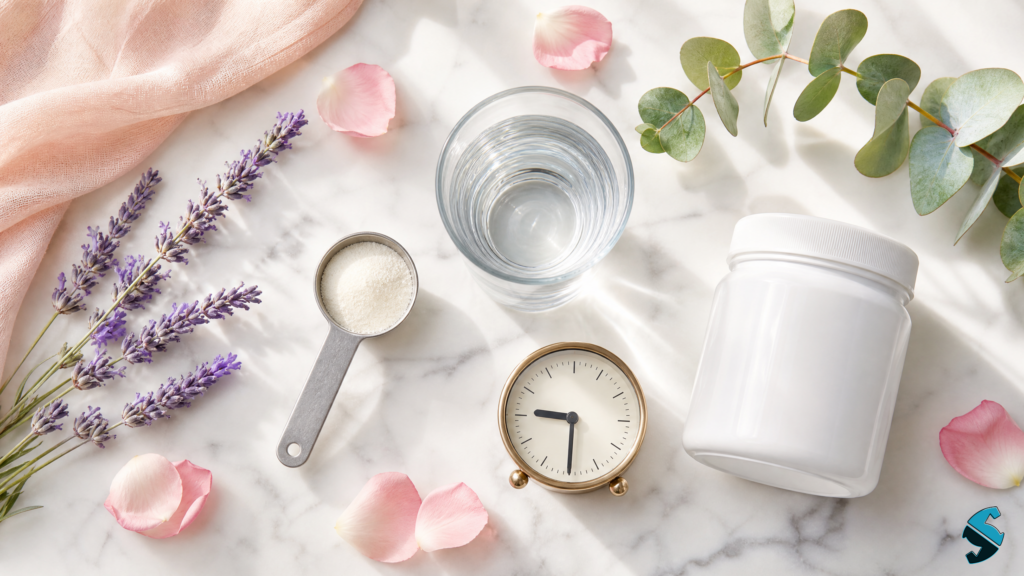
What happens 30 minutes after you take it
Three to five grams. Thirty to sixty minutes before bed. That’s the protocol showing up consistently across the research.
Here’s the mechanism, and it’s worth understanding because it explains why this works differently than anything else you’ve tried for sleep.
Glycine activates specific receptors in the part of your brain that runs your internal clock. The one that decides when you’re awake and when you’re done. When those receptors fire, two things happen. Blood flows toward your skin. And your core body temperature drops.
That temperature drop is not a side effect. It is the point.
Your core temperature has to fall for your body to enter deep sleep. It’s not optional. It’s physiology. And most people, especially people running hot from full days and full lives, never get that drop fully. So they sleep but they don’t recover.
Glycine triggers the drop on purpose. Faster onset. Deeper stages. No grogginess in the morning because it’s not sedating you. It’s just giving your system the signal it was waiting for.
Dr. Brad Stanfield, who is typically cautious about supplements, puts it this way: glycine gives you the benefits of sleep medications without the side effects. No dependency. No morning fog. Just better sleep doing what sleep is supposed to do.
The magnesium twist
Here’s where it gets interesting for anyone already taking magnesium glycinate before bed.
Magnesium glycinate is 80 to 86 percent glycine by composition. A 400mg capsule contains only about 60mg of elemental magnesium. What it’s mostly delivering is glycine.
You may have been accidentally taking a glycine supplement for months. And noticing it helps. Now you know why.
You can buy glycine straight. Powder form, tasteless, mixes into water or anything else. A full dose costs a fraction of what you’re spending on magnesium glycinate. And if you actually need more magnesium, which many people do, add that separately. Use both on purpose instead of by accident.
Two supplements accidentally bundled together and sold as one. Worth knowing.
The part that matters if you’re training
Sleep is where your muscles repair. That’s not a metaphor. The rebuild happens at night or it doesn’t happen. And glycine is right in the middle of that process.
Across 34 human studies, glycine kept showing up for things well beyond sleep. Increased muscle mass and grip strength. Less inflammation. Lower blood pressure in people with metabolic syndrome. Improved blood sugar and insulin response. And in a 7-year study of over 4,000 heart patients, the lower someone’s glycine levels, the more likely they were to have a heart attack.
The brain stuff is just as interesting. Fifteen out of eighteen studies showed it made people sharper. Memory, learning, focus. The things you need to run a business and a life.
Dr. Jin Sung puts it plainly: low glycine equals poor sleep. And poor sleep equals everything downstream being harder than it needs to be.

The practical part
Dose: 3 to 5 grams taken 30 to 60 minutes before bed. Most studies used this amount. Start there.
Form options:
- Straight glycine powder. Tasteless, mixes in water, inexpensive, available online. Simplest and cheapest way to do it.
- Magnesium glycinate capsules. Works, but you’re mostly getting glycine anyway. Fine if you want both. Just know what you’re actually buying.
- Magnesium bisglycinate chelate. 250mg delivers over 1,500mg of glycine. Another option if you prefer capsules.
What to skip: gummies, blended sleep formulas with a dozen ingredients, anything with melatonin already added. You don’t need the noise. You need the compound.
Food sources if you want to eat your way toward it: bone broth, chicken skin, pork rinds, egg whites, connective tissue from any animal source. The vendors at O’Fallon Station Farmers Market with whole animals and bones are a better glycine source than anything in the supplement aisle. Though the supplement is faster and measurable.
Timing: evening only for sleep benefits. Not a morning supplement. This is the nighttime bookend to your morning coffee routine. One optimizes how you start. The other optimizes how you recover. They work together even though they’re hours apart.
One note: as with anything new, check with your doctor first, especially if you’re on blood pressure medication or managing a metabolic condition.

The bottom line
You are asking a lot of your body this summer. Long days, full schedules, physical activity, decisions, heat. Recovery isn’t a luxury for people running this hard. It’s the strategy.
Three to five grams before bed. Cheaper than your current sleep supplement. Backed by more research than almost anything else in that category. And already inside the magnesium you might be taking anyway.
Four doctors doing independent research, all landing on the same answer. When that happens it’s worth paying attention to.
Consider this me passing it along.
Sources — read and ask more questions at ReelCall.app – click each link below

- Glycine: The Sleep Hack Doctors Forget to Mention — Dr. Jin W. Sung →
- Doctor Reveals Why He Takes Glycine Every Day — Dr. Brad Stanfield →
- Why Glycine is Suddenly Rising as an Anti-Aging Amino Acid — High Intensity Health →
- Why Most People Are Glycine Deficient — Dr. Ken Berry →
Dave Prouhet is a certified personal trainer and co-owner of Studio Strong in O’Fallon, IL. Studio Strong works with busy people who want to feel as good as they perform. By appointment only. 629 West Highway 50, O’Fallon. studiostrong.fit or 618-581-0193.




 Previous Post